Category: Nezaradené

  • Fulfillment vs. in-house warehousing: what’s worth it and when? (A comprehensive comparison)

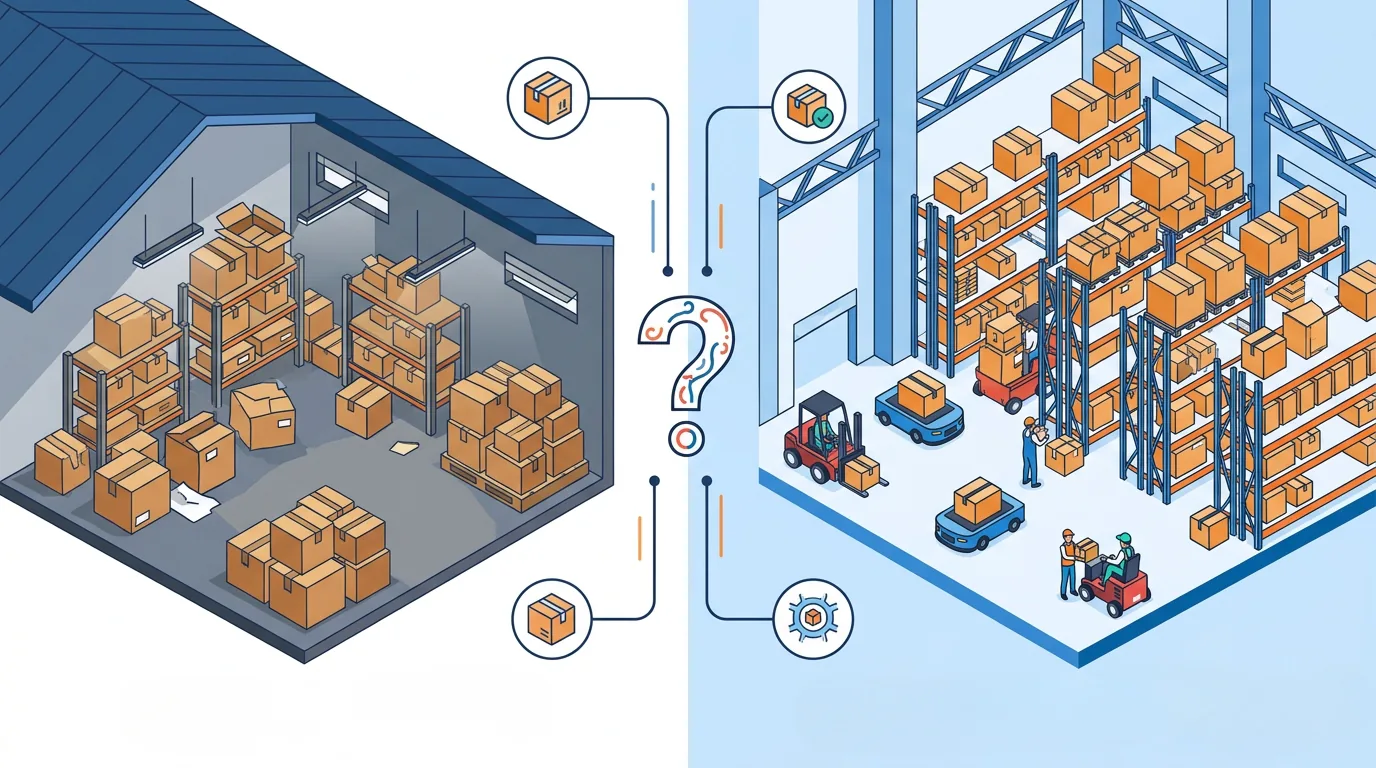
    Fulfillment vs. in-house warehousing: what’s worth it and when? (A comprehensive comparison)

    Having your own warehouse seems appealing at first. You’re in control, you can see the stock, and you don’t need anyone else. But as your online shop grows, this advantage quickly turns into a burden – rent, wages, software, insurance, and all that before you’ve even packed your first parcel.

    On the other hand, fulfilment isn’t for everyone. For certain types of goods or business models, having your own warehouse still makes sense. So how do you decide?

    In this article, we’ll provide you with specific tools: a comprehensive cost comparison, a table of pros and cons, a break-even calculation, and clear recommendations – at what volumes each option pays off.

    Fulfillment vs. your own warehouse: Having your own warehouse usually only pays off for very specific goods (oversized, chilled, extremely premium) or volumes exceeding 10,000 orders per month with a stable product range. For most growing e-shops, fulfilment is cheaper, more flexible and more scalable.

    Comparison: 8 key parameters

    ParameterOwn warehouseFulfillment (3PL)
    CostFixed (you always pay)Variable (you only pay for usage)
    StartHigh initial investmentMinimal initial investment
    ScalabilityLimited – space and peopleAutomatic – no limits
    Seasonal fluctuationsProblem – temporary staff requiredNo change – flexible capacity
    Process controlFull direct controlIndirect – via contract and reporting
    Delivery speedDepends on your capacityGuaranteed same-day dispatch
    Expansion abroadLogistically very demandingSimple – couriers are partners
    Shipping costsIndividual (more expensive)Volume-based contract rates (cheaper)

    Own warehouse: a comprehensive cost analysis

    The biggest illusion of having your own warehouse is that “you know what you’re paying”. In reality, most e-shops underestimate the actual costs – because some are hidden or taken for granted.

    Direct costs of an in-house warehouse (monthly, Bratislava and surrounding area, 2026)

    • Warehouse rental: €150–800/month (depending on size and location)
    • Utilities (electricity, heating, lighting): €80–300 per month
    • Insurance for premises and goods: €50–200 per month
    • Warehouse worker’s salary (or owner’s time): €800–1,500 per month
    • Warehouse software (WMS / ERP): €50–300 per month
    • Packaging materials (boxes, tape, padding): €100–500 per month (retail prices)
    • Maintenance, repairs, equipment: €30–150 per month

    Total fixed costs: €1,260 – €3,750 / month – and that’s excluding delivery costs.

    The key problem: You pay these costs even if you have 10 orders, even if you’re ill, even if it’s August and sales are stagnating.

    Hidden costs that most people forget to factor in

    • Owner’s time: If you pack personally for 3 hours a day × 22 working days × your hourly rate of €40 = €2,640 a month in lost opportunities.
    • Error costs: With a 1% error rate on 300 orders = 3 faulty parcels × €15 in complaint costs = €45 per month. And that’s just the direct costs.
    • Opportunity costs: You cannot use the time spent on packaging for marketing, product development or sales.
    • Growth costs: Every doubling of volume = a new problem with space and staff. Not smooth growth.

    Fulfillment: a realistic cost structure

    With the fulfilment model, you only pay for what you actually use. No additional fixed commitments. Costs mirror your sales – they rise when you sell, and fall when you don’t.

    You can find a detailed breakdown of the individual components of fulfilment pricing in our article on fulfilment pricing. Here, we’ll focus on comparing the overall impact on your cash flow.

    Variable vs. fixed cost structure – graphical comparison

    Own warehouse: Costs = FIXED (€1,260 – €3,750) + variable shipping For 50 orders = €25 – €75 per order (excluding shipping) For 500 orders = €2.50 – €7.50 per order (excluding shipping)  Fulfillment (Pack4you): Costs = VARIABLE (only for actual usage) For 50 orders = €4.50 – €6.00 per order For 500 orders = €3.20 – €4.50 per order  Break-even point: typically around 150 – 300 orders per month

    Break-even analysis: from what volume does it become worthwhile?

    This is the most important question. And the answer is individual – it depends on your fixed costs and average order value. Take a look at three typical scenarios:

    Scenario 1: Home-based e-shop (garage / living room)

    • Fixed costs: ~€400 per month (excluding rent, own time)
    • Fulfillment costs: €4.80 per order

    Fulfillment pays off from: 83 orders / month

    In this scenario, the threshold is very low. If you dispatch more than 80 orders a month and pack them yourself, fulfilment is cheaper – and you get your time back.

    Scenario 2: Rented warehouse (small space, 1 part-time worker)

    • Fixed costs: ~€2,200 per month
    • Fulfillment costs: €4.50 / order

    Fulfillment pays off from: 490 orders / month

    In this scenario, the threshold is higher – but it also means you’re free from the burden of rent, the part-timer’s wages and all fixed costs. With fewer than 490 orders, you’ll save money, but not time.

    Scenario 3: Medium-sized warehouse (2 employees, WMS, insurance)

    • Fixed costs: ~€4,500 per month
    • Fulfillment costs: €3.90 / order (lower price for higher volumes)

    Fulfillment pays off from: 1,154 orders / month

    At this volume, the decision is more complex. Strategic factors must also be taken into account: do you want to specialise in logistics or in sales? An in-house warehouse at this volume only makes sense if you have truly specific requirements for packaging or goods.

    When does having your own warehouse really make sense?

    Despite the clear advantages of fulfilment, there are situations where your own warehouse is the better option. Let’s be fair:

    ✔ Oversized or very heavy goods (furniture, machinery) – special requirements that standard warehouses cannot handle

    ✔ Goods requiring special conditions (cold chain, hazardous substances, medical devices)

    ✔ Extremely premium products, where every parcel must be a visual experience under the owner’s direct supervision

    ✔ Very high volumes (10,000+ orders/month) with a stable product range – where your own infrastructure may be cheaper

    ✔ If your warehouse space is owned (not rented) and your staff are multi-skilled

    In all other cases – and this applies to 90% of growing Slovak e-shops – fulfilment offers a better balance of price, flexibility and speed.

    The hybrid model: the best of both worlds?

    Some e-shops combine both approaches. A typical hybrid model looks like this:

    • Standard product range: in a fulfilment centre (fast dispatch, low costs)
    • Oversized/special goods: own warehouse or supplier’s warehouse
    • B2B orders (pallets, large packages): direct dispatch from the manufacturer

    Pack4you can support this model – integrating multiple product sources into a single system is no problem. The customer always receives a single parcel, regardless of where the goods come from.

    Practical checklist: How to decide?

    Answer these questions honestly:  Do I dispatch more than 100 orders a month? Do I pay more than €300 a month in warehouse rent?  Does packing take me or an employee more than 2 hours a day? Do I have seasonal fluctuations that I can’t keep up with? Do I want to expand abroad? Do I want to focus on growth, not day-to-day operations? 

    If you answered YES to 3 or more questions → fulfilment is worth it for you.

    If you answered YES to fewer than 3 → consider a consultation and a detailed calculation.

    Conclusion: The question isn’t “fulfilment or warehouse” – but “when?”

    Most e-shops don’t make a mistake by choosing fulfilment – they make a mistake by putting it off for too long. Every month spent with your own inefficient logistics is money, time and energy lost that could have gone towards growth.

    Pack4you offers a free consultation and calculation tailored to your specific situation. No strings attached – just figures that show you where you are and where you could be.

    → Find out your break-even point. Contact Pack4you and you’ll receive a bespoke calculation within 24 hours.
  • How fulfilment works step by step: from order to delivery

    How fulfilment works step by step: from order to delivery

    The clock on the wall reads 11:22. The customer has just clicked the ‘Order’ button. Where will their parcel be in 10 minutes? In an hour? The following morning? And where do you fit into the whole story?

    Fulfillment is, at its core, a precisely defined chain of events where every link must function at the right time. If one link fails, the customer will feel it. If they all work, you won’t even know about the logistics – and that is precisely the goal.

    In this article, we’ll break down the entire fulfilment process step by step, including what happens behind the scenes, which technologies drive orders, and what happens when an exceptional situation arises.

    How does fulfilment work? Fulfilment is a set of processes that automatically trigger the warehouse once an order is received: the system locates the goods, a warehouse worker picks them, packs them, labels them with a shipping label and hands them over to the courier – usually on the same day before the cut-off time.

    Step 0: Connecting the e-shop to the warehouse system (integration)

    Before the first order is processed, your e-shop must communicate with the warehouse management system (WMS). This is a one-off technical step that is set up once and then runs automatically.

    Modern fulfilment centres in Slovakia – including Pack4you – support connections to the most widely used platforms:

    • Shoptet, WooCommerce, Shopify – directly via API or plug-in
    • Custom solutions – via a universal REST API / XML feed
    • Marketplaces – Allegro, Mall and other platforms

    Once connected, the system sends every new order to the warehouse in real time. This is the basis for same-day shipping, which today’s customers have come to expect.

    Inventory management – the synchronisation of stock levels back to your e-shop works on the same principle. When the last item in stock runs out, the e-shop knows and automatically removes the product from sale.

    Step 1: Receiving goods into the warehouse (inbound / stocking)

    Every fulfilment relationship begins with stocking. You send the goods to the fulfilment centre – whether from the manufacturer, an importer or your own premises. What happens next?

    What happens during goods receipt?

    1. Physical inspection of the consignment: The warehouse verifies that the correct number of items has arrived and checks for visible damage. Any discrepancies are recorded and reported to the client.
    2. Scanning and registration in the WMS: Each product is assigned a storage location. The system knows that a specific SKU is on shelf B, shelf 3, position 7.
    3. Labelling: If the goods do not have barcodes or EAN codes, the fulfilment centre will add them after the client has provided the details. Without barcodes, reliable pick & pack is not possible.
    4. Checking expiry dates: For food, nutritional supplements or cosmetics, the expiry date is also recorded to ensure correct FIFO/FEFO dispatch.

    Why it matters: Inaccurate stock placement is the root cause of 80% of logistics errors. If the system does not know where the goods are, it cannot pick them correctly.

    Step 2: Order receipt and automatic processing

    The customer has clicked „Pay“. The order flies from your e-shop’s servers directly to the WMS fulfilment centre. The entire transfer takes seconds.

    What does the WMS do with the order automatically?

    • Checking stock availability: The system immediately checks whether all ordered items are in stock.
    • Prioritisation: If necessary, orders can be prioritised – for example, for express delivery or special customer requests.
    • Generating a picking list: The WMS automatically generates an optimised route for the warehouse operator so that they can move through the warehouse via the shortest possible route and collect all items.
    • Stock reservation: Picked goods are immediately ‘locked’ in the system so that the same item cannot be allocated to another order.

    Step 3: Pick – collecting goods from the warehouse

    This is the moment when the physical world meets the digital. The warehouse worker (picker) receives an instruction on their mobile terminal or headset: “Go to B-3-7, pick up 2 red T-shirts in size L.”

    Picking methods – how it works in practice

    • Single order picking: One warehouse worker processes a single order from start to finish. Ideal for bulky items or complex packaging.
    • Batch picking: One warehouse worker collects items for multiple orders at once. This saves time when dealing with large volumes of similar goods.
    • Zone picking: The warehouse is divided into zones, with each warehouse operator responsible for their own. The order ‘passes through’ the zones and is finalised at the end.

    Every item picked is scanned. The WMS verifies that the warehouse operator has taken the correct product and the correct number of items. If the scan does not match, the terminal alerts them to the error before packing – not after delivery to the customer.

    Step 4: Pack – order packing

    Proper packaging is more than just a box and some tape. It also protects the product, represents the customer’s first physical contact with your brand, and serves as proof of quality.

    What does a professional packing process involve?

    1. Choosing the packaging: Our experienced team selects the right size of box or bag – based on the dimensions and weight of the contents. The goal is always the same: minimum weight, maximum protection.
    2. Filling material: Bubble wrap, paper padding or air cushions, depending on the fragility of the goods.
    3. Including documents: Invoice, delivery note, or possibly a gift card or marketing material – all automatically printed by WMS according to the client’s settings.
    4. Shipping label generation: WMS automatically selects the optimal courier (based on destination, weight and price), generates the label and affixes it to the parcel.

    Branded packaging: If you have your own boxes with a logo, printed tape or include marketing materials, the fulfilment centre will incorporate this into the process. The customer receives an experience of your brand, not from an anonymous warehouse. Pack4you also offers personalisation using stickers with your graphics.

    Step 5: Dispatch and handover to the courier (shipping)

    The packed parcel is sent to the dispatch ramp, where it is collected by the courier service. This stage has a key parameter: the cut-off time.

    The cut-off time is the time by which an order must be in the system to be dispatched on the same day. Thanks to its strategic location in Bratislava, Pack4you ensures a later cut-off time – orders received by midday are dispatched on the same day.

    Once handed over to the courier, a tracking number is automatically generated in the system. This is:

    • sent to the customer by email or SMS,
    • recorded in your e-shop (the customer can see it in their order history),
    • recorded in the Pack4you portal for your reference.

    The couriers we work with (DPD, SPS, Packeta, DHL and others) collect parcels directly from the warehouse. No trips to the post office, no waiting.

    Step 6: Last-mile delivery – delivery to the customer

    Last-mile delivery is the final leg of the journey – from the courier’s depot to the customer’s door. It is the most expensive and complex part of the entire chain.

    Delivery options that customers appreciate

    • Delivery to address (next working day): The standard in Slovakia and the Czech Republic.
    • Collection points (Packeta, Z-BOX, DPD Pickup): A cheaper alternative that the customer can collect at their convenience.
    • Express delivery (same-day, time-slot): A premium service for urgent orders within Bratislava.
    • International delivery: Thanks to contracted rates with carriers, a small e-shop can access prices it wouldn’t be able to negotiate on its own.

    Step 7: Returns processing (reverse logistics)

    Returning goods isn’t the end of the story – it’s a new chapter. And in a professional fulfilment centre, it follows a precisely defined process.

    How is a returned parcel processed?

    • Receipt of the returned parcel: The courier delivers the parcel back to the warehouse.
    • Checking the condition of the goods: A warehouse worker checks whether the goods are unused, damaged or incomplete.
    • Decision based on your rules: Depending on your instructions, the goods are either restocked (if in good condition), marked as B-grade, or sent for disposal.
    • Processing the refund: The WMS automatically notifies your e-shop, which can then initiate the refund.

    Why this matters: E-shops in the fashion sector see return rates of 20–40%. Without a functional reverse logistics process, every return costs you twice as much.

    What happens when something goes wrong? (Exception handling)

    No warehouse is perfect. What matters is not whether an exception occurs – but how quickly it is resolved. Professional fulfilment centres have a defined procedure for every situation:

    • Item out of stock: The system puts the order on hold and automatically notifies both you and the customer.
    • Damaged goods on receipt: Photographic documentation, notification to the client, complaint to the supplier.
    • Courier delay: Notification to the customer, or a change of carrier in the event of repeated problems.
    • Return of undelivered parcels: A parcel that the customer has not collected or was not at home to receive will be returned to the warehouse and await further instructions.

    Technologies driving modern fulfilment

    Behind every properly functioning fulfilment centre lies a technological foundation that most e-shops would not even have the chance to build individually:

    • WMS (Warehouse Management System): The brain of the entire warehouse. It manages receiving, stock levels, picking, packing and dispatch.
    • Barcodes and scanners: Every movement of goods is recorded. No manual counting, no guesswork.
    • Integration layer (API): Connects the WMS with your e-shop, couriers and accounting system in real time.
    • Reporting dashboard: As a client, you can view the following in real time: stock levels, number of fulfilled orders, error rates and costs.

    Real-time timeline: from order to delivery

    11:22 – customer places an order on your e-shop 11:22 – order arrives in the Pack4you WMS 12:35 – warehouse staff pick the goods (pick) 12:50 – order packed, label applied (pack) 15:30 – courier collects parcels from the warehouse 16:00 – customer receives an SMS with a tracking number The following morning – parcel delivered

    Conclusion: Fulfilment as a system, not a coincidence

    The difference between an e-shop that is growing and one that is stagnating is not always down to the product or marketing. Very often, it comes down to logistics – specifically, whether you have a system in place or rely on improvisation day in, day out.

    A professional fulfilment process is designed so that every step – from stock replenishment through pick & pack to last-mile delivery – runs predictably, quickly and with minimal errors.

    Pack4you operates a fulfilment centre in Bratislava with connections to both Slovak and international couriers. Onboarding a new client, from integration to the first dispatch, typically takes 1–5 working days.

    → Would you like to see how fulfilment would work for your e-shop? Arrange a free consultation with Pack4you.

  • How much does fulfilment cost for an online shop? Real-world pricing and calculation examples (2026)

    How much does fulfilment cost for an online shop? Real-world pricing and calculation examples (2026)

    “That sounds good, but how much will it cost per month?” – This is the question we get asked most often. And it’s the right question. Because outsourcing logistics only makes sense if it’s financially worthwhile.

    The problem is that fulfilment doesn’t have a single price. It’s a combination of several factors that varies depending on your volume, the type of goods and the chosen carrier. In this article, we’ll show you what the price consists of, what the real figures are in 2026 and how to calculate whether it’s worth it for you.

    How much does fulfilment cost? In 2026, the average e-shop will pay approximately €3.80–€5.50 (excluding VAT) to process a single-item order (including delivery within Slovakia). The exact amount depends on the weight of the parcel, the number of items and the chosen courier.

    What does the fulfilment price consist of? (Cost structure)

    Fulfillment is not a single fixed amount. It is the sum of variable fees that reflect the actual use of warehouse space and capacity. If you aren’t selling, you pay almost nothing. If you sell a lot, the price per item decreases.

    1. Warehousing

    Basic charge – you pay for the space your goods occupy. This is billed on a monthly basis (some warehouses on a daily basis), according to the space occupied:

    • Pallet space: Ideal for bulkier or heavier goods (furniture, appliances, toiletries, books).
    • Shelf space (box/bin): For small goods – cosmetics, electronics, clothing, dietary supplements.
    • Entire shelf position: For medium-sized goods with a larger number of SKUs.

    Tip: Modern warehouses charge based on the space actually occupied on a given day. If you dispatch goods quickly and the shelf is empty, you pay significantly less.

    2. Order processing – Pick & Pack

    This is the heart of the whole service. It includes the warehouse staff’s time spent picking, checking, packing and labelling the goods. At Pack4You, pricing is simple – it depends on the weight of the shipment, not the number of items in the order:

    • Basic fee for orders up to 5 kg – a fixed price regardless of how many products the order contains.
    • Surcharge for each kilogram over 5 kg – each additional kilogram is charged separately.

    3. Packaging materials

    At Pack4You, packaging materials are already included in the order processing price – no hidden extra charges. The price covers the box, filling material and shipping label.

    If you have your own branded packaging, we’ll be happy to incorporate it into the packing process so that every order represents your brand.

    4. Shipping and delivery

    Thanks to high volumes, Pack4You has negotiated rates with couriers (DPD, SPS, Packeta, DHL…) that small senders cannot access on their own. This saving is one of the strongest arguments in favour of fulfilment.

    5. One-off and occasional charges

    • Cash on delivery: Fee for processing and transferring cash.
    • Returns processing: For receiving, checking and restocking returned goods.
    • Special labelling: Adding EAN codes, safety labels, etc.

    Overview of typical fulfilment prices in 2026 (Slovakia)

    The following table shows indicative price ranges common on the Slovak market:

    ItemPrice fromPrice to
    Storage – pallet space / month€15.00€35.00
    Storage – shelf space / month€3.00€10.00
    Order processing (1 item)€0.80€1.50
    Each additional item in the order€0.20€0.50
    Packaging material (standard parcel)€0.40€1.20
    Shipping within Slovakia – courier (up to 5 kg)€2.20€3.50
    Shipping within Slovakia – collection point€1.50€2.50
    Return processing€0.80€2.00

    Note: Prices are indicative and exclude VAT. The exact price list depends on the volume, type of goods and agreed terms. Contact Pack4you for a bespoke quote.

    Real-life calculation examples: what will you pay each month?

    The theory is all well and good. Let’s look at specific figures for three typical e-shop profiles:

    Example A: A start-up e-shop selling natural products

    • Volume: 120 orders per month, average of 1.5 items per order
    • Products: Cosmetics, small items (5–10 shelf positions)
    • Cost estimate: Storage ~€50, pick & pack ~€150, packaging ~€60, shipping ~€270

    Total costs: approx. €530–700 per month

    Cost per order: approx. €4.40 – €5.80

    What you get: 40+ hours a month freed up for marketing and sales, no packaging hassles whilst on holiday.

    Example B: Growing fashion e-shop

    • Volume: 600 orders per month, average 1.8 items
    • Products: Clothing and accessories (2 pallet spaces + 20 shelf positions)
    • Estimated costs: Storage ~€200, pick & pack ~€700, packing ~€300, shipping ~€1,500

    Total costs: approx. €2,700 – €3,500 / month

    Cost per order: approx. €4.50 – €5.80

    What you get: Scalable capacity without warehouse rent, seasonal peaks without temporary staff.

    Example C: Medium-sized electronics e-shop

    • Volume: 1,500 orders per month, average 1.2 items
    • Goods: Electronics (10 pallet spaces)
    • Estimated costs: Storage ~€400, pick & pack ~€1,400, packaging ~€600, transport ~€3,500

    Total costs: approx. €5,900 – €7,500 / month

    Cost per order: approx. €3.90 – €5.00

    Economies of scale: With higher volumes, the cost per order decreases – fulfilment becomes more cost-effective as volumes increase.

    Hidden fees to watch out for

    When comparing price lists from different fulfilment companies, always ask about these items – some firms hide them in the terms and conditions:

    1. Minimum volume fee: Some centres charge a monthly minimum. If you dispatch less, you still pay it.
    2. Inventory fee: Regular physical stock-taking – sometimes included in the price, sometimes charged separately.
    3. Fee for bulky items: Non-standard dimensions, weight over the limit – this can be a source of surprises.
    4. Returns management fee: If e-shops have a 20–30% return rate, this can be a significant cost.
    5. System integration fee: Shoptet / WooCommerce integration – one-off or monthly?

    Pack4you: Transparent pricing with no hidden fees. Before signing the contract, you’ll receive a detailed quote tailored to your specific needs.

    Calculator: Is fulfilment worth it for me?

    Before you decide, answer these 4 questions and add up the monthly costs of managing your own logistics:

    1. Warehouse rent (including utilities and insurance): _____ € / month

    2. Warehouse staff wages or owner’s time × hourly rate: _____ € / month

    3. Packaging materials (boxes, tape, padding): _____ € / month

    4. Costs of errors (complaints, reshipments): _____ € / month 

    Total = _____ € 

    If the total is higher than €1.50–€2.00 per parcel (excluding delivery), Pack4you’s fulfilment service will save you money from the very first month.

    Why choose Pack4you? Location as a competitive advantage

    Pack4you operates a fulfilment centre right in Bratislava – a strategic location for fast dispatch across Slovakia and to neighbouring countries.

    • Later cut-off time: Thanks to our proximity to the depots of major couriers, we dispatch orders received in the morning on the very same day – that’s the speed customers love.
    • Lower shipping costs: Volume = better prices. You’ll save 15–40% compared to your own rates.
    • No minimum order quantities: Suitable for e-shops with 50 or more orders per month. You don’t pay for capacity you don’t use.
    • Transparency: An online portal with real-time stock levels, dispatch history and invoices all in one place.

    Conclusion: Fulfillment pays off for most e-shops sooner than they expect

    Many e-shop owners put off the decision to outsource logistics because they feel they “aren’t big enough yet”. In practice, the opposite is true – the sooner you bring fulfilment on board, the sooner you’ll save time and money for growth.

    Fulfillment from Pack4you isn’t an expense – it’s an investment that, at the right volume, pays for itself in savings on costs, time and stress. And the price? It’s lower than most online shops expect.

    → Would you like a precise quote for your online shop? Contact Pack4you – the quote is free and non-binding.

  • 7 signs your online store needs to outsource its logistics (and what to do about it)

    7 signs your online store needs to outsource its logistics (and what to do about it)

    Every online store starts in a garage, a living room, or a spare room. The first orders are a joy — you pack each one with care and drop it off at the post office yourself. But success has a dark side: as turnover grows, so does the logistics burden. And that’s exactly where it’s decided whether your business will grow — or get stuck.

    How do you know when you’ve crossed the line where in-house logistics stops being an advantage and starts becoming a brake on your growth? Here are 7 specific signs you shouldn’t ignore.

    When does outsourcing logistics pay off? If you recognise at least 3 of the following 7 signs, it’s time to seriously consider fulfillment. Most online stores save 15–30% of logistics costs and dozens of hours per month.

    Signal 1: Warehouse chaos and inaccurate stock levels

    You’re selling products you don’t have — or can’t find

    Has it ever happened that you sold a product that wasn’t actually in stock? Or spent 20 minutes searching for the last item in size L? Warehouse chaos isn’t just an inconvenience — it’s a direct loss of money.

    Without a professional WMS (Warehouse Management System), maintaining 100% stock accuracy with a growing number of SKUs is nearly impossible. Every inventory error means either an overpaid order or an unhappy customer.

    What it actually costs: One incorrect order = postage there, postage back, time spent handling the complaint, payment refund. At a 5% error rate with 200 orders per month, you lose 10 orders — each costing you an average of €8–15.

    How Pack4you solves it: Every stock movement is scanned and recorded. You can see stock levels in real time through an online portal.

    Signal 2: Delayed order dispatch

    Customers are waiting longer than you promised

    Today’s customer is demanding. If they order on Monday and you dispatch on Thursday, a negative review is almost guaranteed. Late delivery is now one of the most common reasons for losing a customer.

    The problem arises when dispatch depends on your personal time, trips to the post office, or the capacity of a single person. Illness, holiday, a business trip — and parcels sit still.

    Real-world impact: According to e-commerce surveys, more than 60% of customers won’t order again from a store where they experienced late delivery. That’s a direct loss of repeat purchases.

    How Pack4you solves it: Guaranteed same-day dispatch for orders placed before the cut-off time. The warehouse operates 5 days a week, independent of your availability.

    Signal 3: Growing complaints and packing errors

    Customers receive the wrong product, a damaged shipment, or an incomplete parcel

    Packing under pressure creates mistakes. Wrong colour, wrong size, missing invoice, insufficient padding. Every complaint costs you time, money, and reputation.

    The higher the order volume, the greater the probability of errors in a manual process without control mechanisms. The human factor cannot be eliminated — it can only be systematically minimised.

    How it works in a professional warehouse: Every picked product is scanned and verified against the order. Double-checked, no improvisation.

    How Pack4you solves it: Pick & pack with mandatory scanning and double verification of every item, reducing errors to near zero.

    Signal 4: Fixed costs eating into your margins

    You pay for the warehouse, salaries, and utilities even in slow months

    Warehouse rent, staff salaries, utilities, insurance, packaging materials, warehouse software — these are all fixed costs. You pay them regardless of how many orders you dispatch in a given month.

    With in-house logistics, your breakeven point is very low — but so is your ceiling. Growth means an immediate increase in fixed costs (larger warehouse, more staff), not gradual scaling.

    Fixed vs. variable costs: With the fulfillment model (3PL), you only pay for what you use — storage based on space occupied, packing based on number of orders. Slow month = low invoice. Busy month = capacity scales automatically.

    How Pack4you solves it: A transparent pricing structure with no hidden fees. You pay for storage space, order processing, and shipping — nothing more.

    Signal 5: Seasonal peaks overwhelm you

    Christmas and Black Friday turn from opportunity into a nightmare

    Seasonal spikes are a huge opportunity for online stores. But if your logistics capacity can’t keep up, the opposite happens — your biggest sales days are precisely when logistics slows you down.

    Receiving 10 times more orders than usual, with the same warehouse capacity and the same number of hands. The result: delayed dispatches, unhappy customers, and negative reviews at exactly the moment when the most people are watching.

    A real-world example: A toy online store normally dispatches 80 orders a day. In the first week of December, volume jumped to 350 orders. Without a fulfillment partner, they would have managed only with 3 temporary workers and night shifts — and delays would still have occurred.

    How Pack4you solves it: Flexible capacity with no long-term commitments. Whether you have 50 or 1,000 orders per day, Pack4you handles them with the same accuracy and within the same timeframes.

    Signal 6: The owner is packing instead of selling

    Your time has value — you’re just spending it on the wrong things

    This is the most common — and most expensive — problem for small and medium online stores. An owner who should be handling strategy, marketing, new products, and customer service instead spends 4–6 hours a day with scissors and packing tape in hand.

    Do the maths: if your time is worth €40 per hour, and packing takes 4 hours a day — that’s €160 wasted daily. Over 20 working days a month: €3,200 in lost opportunities every month.

    Burnout is a real threat: Logistics overload is one of the main reasons small online store owners stop trading. Not a bad product, not weak marketing — but physical and mental exhaustion from day-to-day operations.

    How Pack4you solves it: Hand over the entire logistics operation to us. Your time belongs to selling, not packing.

    Signal 7: Logistics limitations are blocking your expansion

    You want to sell into the Czech Republic or across the EU, but logistics is holding you back

    Are you planning to expand into foreign markets? Shipping internationally from your own garage in Bratislava is both logistically and financially very demanding — shipping rates for small senders are simply not competitive.

    A professional fulfillment partner has established partnerships with couriers across Europe at volume-based rates that are out of reach for an individual business. Every new market can be opened without building logistics infrastructure from scratch.

    How Pack4you solves it: Dispatch to Slovakia, the Czech Republic, and across the EU. Contracted rates with DPD, DHL, SPS, Packeta, and other carriers.

    A new market = a new destination in the system, not a new infrastructure to build.

    What to do when you recognise yourself in these signs?

    If you identified with at least three of these points, don’t wait for the situation to escalate. The process is simpler than you think:

    1. Audit: Calculate the real costs of your in-house logistics (rent + salaries + owner’s time + errors).
    2. Consultation: Contact Pack4you — we’ll prepare a free calculation based on your order volume and product type.
    3. Integration: Connecting your online store to our system typically takes 5 days.
    4. Inbounding: Send your stock — from the first order onwards, we handle the logistics.

    Conclusion: Logistics should be an engine, not a brake

    Outsourcing logistics is not an admission of defeat — it’s a strategic decision. The most successful online stores in the Slovak market don’t grow because they have the biggest warehouse. They grow because they focus on selling and entrust logistics to a partner who does it better and at a lower cost.

    Pack4you is your fulfillment partner in Bratislava. We take care of your stock, parcels, and customers — so you can focus on growth.

    → Did you recognise yourself in any of these signs? Contact Pack4you and find out what fulfillment would actually cost you.

  • What is fulfillment? A complete guide for online stores

    What is fulfillment? A complete guide for online stores

    Every successful online store reaches a point where its logistics can no longer keep up. Boxes pile up, packing tape is everywhere, and the owner spends evenings packing instead of focusing on strategy. That’s exactly where fulfillment comes in.

    But what does fulfillment actually mean? Is it just a trendy word for “warehouse,” or is it something far more complex? In this article, we’ll explain it from the ground up — no unnecessary jargon, just practical examples.

    What is fulfillment? Fulfillment (or e-commerce fulfillment) is fully outsourced logistics for online stores. It covers goods receiving, warehousing, order processing, packing, shipping, and returns handling — all carried out by an external partner (a fulfillment center) on your behalf.

    Fulfillment vs. in-house logistics: the key difference

    Picture these two scenarios:

    Scenario A — in-house logistics: You arrive at your garage in the morning, print orders, run between shelves, pack items, stick labels, and then drive them to the post office or wait for a courier. You repeat this every single day.

    Scenario B — fulfillment: A customer places an order. The system automatically sends an instruction to the warehouse. A warehouse operative picks the item, packs it, and the label is generated by the system. The courier comes directly to the warehouse. The customer receives an SMS with tracking. You didn’t have to do a thing.

    The difference isn’t just about convenience. It’s about scalability, accuracy, and cost efficiency as you grow.

    What does the fulfillment process look like, step by step?

    Fulfillment is not a one-time action — it’s a continuous cycle of five phases:

    1. Goods receiving and inbounding

    You send stock to the fulfillment center — from a manufacturer, importer, or your own storage. The center receives it, verifies quantities, scans each item, and registers it in the warehouse management system (WMS). Every item gets a precise location within the warehouse.

    2. Storage (warehousing)

    Your goods are stored safely — on pallets, shelves, or in bins, depending on the nature of the product. Modern fulfillment centers charge for storage based on actual space used, not a flat rate.

    3. Order receiving and processing

    A customer places an order. It instantly flows from your online store (Shoptet, WooCommerce, Shopify…) directly into the fulfillment center’s WMS. The system locates the item and generates a picking list.

    4. Pick & pack — picking and packing

    A warehouse operative picks the item, packs it in appropriate packaging with protective filling material, and attaches the shipping label.

    5. Dispatch and delivery

    The courier service collects parcels directly from the warehouse. The customer automatically receives a tracking number. The entire process — from order to handover to the courier — takes hours, not days, when fulfillment is set up correctly.

    Why are online stores switching to fulfillment? 4 key reasons

    1. Cost savings — you only pay for what you use

    With your own warehouse, you have fixed costs: rent, salaries, utilities, software, and packaging materials. These costs apply even during slow months.

    With the fulfillment model (3PL — third party logistics), costs are variable:

    • storage is billed based on actual space occupied,
    • packing and shipping are billed per order processed,
    • if you’re not selling, you pay almost nothing.

    The result: most online stores save 15–30% of total logistics costs.

    2. Flexibility during seasonal peaks

    Black Friday, Christmas, seasonal sales — a fulfillment center’s capacity adjusts automatically. No need to rent a larger space or hire temporary staff for a month.

    3. Faster delivery = happier customers

    Fulfillment centers have negotiated contracts with multiple courier services and dispatch hundreds to thousands of parcels every day. This allows them to guarantee next-day delivery — at prices an individual business could never achieve on its own.

    4. Your time goes back to selling

    Every hour spent packing is an hour not invested in marketing, product development, or customer service. Outsourcing logistics gives back the most valuable resource you have — time.

    When does fulfillment make sense? (A quick self-assessment)

    Fulfillment is worth it if you meet at least 2 of these conditions:

    • You dispatch more than 50–100 orders per month
    • Logistics takes more than 2 hours of your day
    • You’re planning to expand internationally
    • You experience seasonal fluctuations in sales
    • You want to scale without hiring warehouse staff

    What does fulfillment with Pack4you include?

    Pack4you operates a modern fulfillment center in Bratislava, serving all of Slovakia and offering international shipping. Our service includes:

    • Goods receiving and inspection: Physical verification, scanning, and registration into the WMS.
    • Storage: Pallet and shelf spaces, insured facilities, controlled conditions.
    • Pick & pack: Double barcode verification, branded packaging to your specifications.
    • Shipping: Contracted rates with DPD, SPS, Packeta, and DHL — with a later cut-off time thanks to our Bratislava location.
    • Reverse logistics: Processing and sorting returned goods, with notifications sent directly to your online store.
    • Integrations: Connectivity with Shoptet, WooCommerce, Shopify, and custom systems via API.
    • Reporting: Real-time visibility — stock levels, stock movements, and shipping statistics.

    Fulfillment vs. 3PL vs. dropshipping: what’s the difference?

    Fulfillment: Your stock, your warehouse (managed by an external center), your parcel delivered to the customer.

    3PL (Third Party Logistics): A broader term that also covers transportation, customs clearance, and other logistics services. Fulfillment is a subset of 3PL.

    Dropshipping: You never own or physically handle the stock — it’s shipped directly by the supplier. You only handle order processing and sales.

    Pack4You is a fulfillment center providing businesses with complete 3PL services — from warehousing to fast order dispatch directly to customers.

    Conclusion: Fulfillment is not a cost — it’s an investment in growth

    In an era where customers expect delivery within 24 hours and hassle-free returns, no online store can afford amateur logistics. Fulfillment is not a luxury reserved for large players — it’s the tool that allows a small online store to operate like a big one.

    Pack4you gives you exactly that: professional logistics with a human touch, transparent pricing, and technology that works for you — even while you sleep.

    → Find out how fulfillment can transform your online store. Contact Pack4you and get a free consultation.